
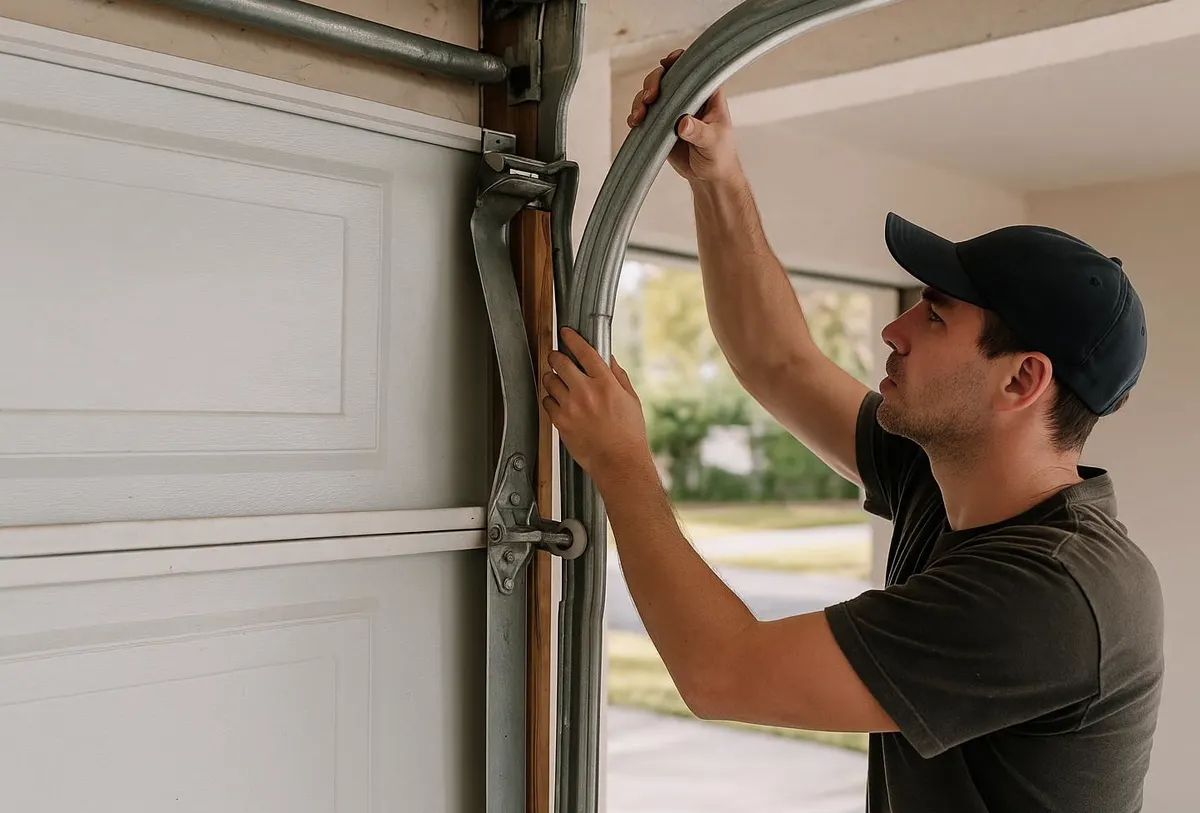
You Notice It on a Quiet Morning
You walk into the garage to grab something before work and there it is: a thin line of daylight along the bottom of the door, right where the concrete meets the panel. Maybe you've also noticed a small drift of dust and grass clippings along the inside edge, or a lizard that darted in during last week's downpour. None of it seemed urgent until you swept out the same pile of debris for the third time this month.
That gap is almost always the bottom seal — the rubber or vinyl strip that runs along the base of the door. It's one of the cheapest, easiest parts to replace, and it's doing more work than it gets credit for.
Why This Small Strip Matters More Here
In a climate with afternoon downpours and long stretches of high humidity, a worn bottom seal isn't just a minor nuisance. Water that creeps under the door during a storm can sit against the slab and contribute to moisture problems, swelling in wood-trimmed doors, and rust on steel panels and hardware. A gapped seal also gives pests an easy entry point, and it lets in dust, pollen, and the gritty red clay that tracks in after a storm. None of this requires a hurricane — a worn seal will let in plenty on an ordinary rainy afternoon.
Signs Your Seal Has Failed
- Visible daylight along the bottom edge when the door is closed
- A hardened, cracked, or flattened strip that no longer looks rubbery
- Water intrusion after rain, even light rain
- Dirt, leaves, or insects collecting just inside the door
- A draft you can feel with your hand along the floor
Tools You'll Need
- Replacement bottom seal (T-style, bulb, or bead type — matched to your door's track profile)
- Utility knife or seal cutter
- Tape measure
- Flathead screwdriver or seal-removal tool
- Stiff brush or shop vac for cleaning the track
- Work gloves
A Quick Note on Seal Types
Garage door bottoms use one of a few track shapes — a single bulb, a T-slot, or a double-fin design. Pull a short section of your old seal and take it with you (or a photo of the cross-section) when buying a replacement, since the wrong profile simply won't seat in the track.
Step-by-Step: Replacing the Bottom Seal
- Measure the door width and buy a seal a few inches longer than needed — you'll trim it to fit.
- Raise the door partially so the bottom panel is at a comfortable working height, then secure it (manually operated doors can be propped; for automatic openers, disconnect power first).
- Remove the old seal by pulling it out of the track, starting at one end. If it's brittle, it may come out in pieces — that's normal.
- Clean the track thoroughly. Built-up dirt, old caulk, or rust flakes will stop the new seal from seating flush.
- Cut the new seal to length, leaving an inch or two of extra material on each end.
- Feed the seal into the track starting at one corner, working it through evenly rather than forcing the middle first.
- Lower the door and check the fit. The seal should touch the floor evenly across the full width with no visible light.
- Trim the excess flush with the edges of the door once you're satisfied with the fit.
While you're at it, check the stapled vinyl weatherstripping along the side jambs and header. If it's cracked or pulling away, a homeowner can usually re-staple or replace it the same afternoon — it's a flat strip, not a mechanical part.
What's a DIY Job vs. What Needs a Technician
Swapping the bottom seal and side weatherstripping is well within reach for most homeowners with basic tools and an afternoon. Call in a technician instead if: the seal won't sit flush because the bottom panel itself is bent, warped, or rusted through; the door doesn't close evenly along the slab (often a sign the track or rollers have shifted); the seal keeps failing quickly in the same spot (sometimes a leveling issue with the slab or door balance); or you're dealing with a commercial door, where seals and panel seams are heavier-duty and tied into wind-load hardware.
When to Call Lakeland Garage Door Pro
If a new seal still doesn't close the gap, or you're seeing rust starting on the bottom panel or track, that's worth a visit. Our Garage Door Repair service handles bent panels, misaligned tracks, and hardware that's corroding from months of humidity. If it's just been a while since anyone checked the rollers, hinges, and balance, our Garage Door Maintenance visit catches small issues — including seal wear — before they turn into a bigger repair.
If your garage door is letting in weather, bugs, or daylight, give Lakeland Garage Door Pro a call. We serve Lakeland, Winter Haven, Bartow, Plant City, Mulberry, Auburndale, Haines City, and Polk City, and we can usually get a technician out fast.